Reviewed · REYKJAVIK
Reykjavik the Northernmost capital in the world
Reykjavik packs a lot into a short half day. This private tour takes you from Althingishus at Austurvöllur to the Pearl on the hill, with stops that feel like walking through Iceland’s story, not just posing for photos. Two things I really like are the hotel pickup from the greater capital area and the onboard Wi-Fi, which makes it easy to map the next photo spot or message family while you’re on the move.
The main thing to keep in mind is that it runs on good-weather conditions. Iceland can be dramatic, and when it turns, you may need layers and flexibility, since the tour can be rescheduled if conditions are poor.
Key things that make this Reykjavik experience work
- Private group up to 4 means the pace stays comfortable and you can linger for photos.
- Pickup from the greater capital area saves you from navigating on your own in wind and rain.
- Onboard Wi-Fi keeps you connected between stops, even while you’re transferring.
- Most stops have free entry, with Perlan and Bessastaðir ticketed for you.
- English is offered, and the guides are praised for friendly, clear communication.
Weighing this one up? Here are a few Reykjavik favourites to set it against.
- Reykjavik: Golden Circle Full-Day Tour with Kerid Crater★ 4.8 · 24,485 reviews
- Reykjavik Food Walk – Local Foodie Adventure in Iceland★ 5.0 · 18,952 reviews
- Iceland: Northern Lights Bus Tour from Reykjavik★ 4.1 · 11,161 reviews
Reykjavik’s Northernmost capital vibe, without the stress
Reykjavik is the world’s northernmost capital, and you feel that geography right away. Even when you stay in the city center, everything seems close together, yet there’s a sense that you’re still on an edge of the map. This tour leans into that. You get a clean route that links the political center, old wooden neighborhoods, modern architecture, and two big “must-see” viewpoints.
I like that it’s not trying to cram in everything Iceland has ever done. Instead, you walk away with a better sense of what Reykjavik is: a small place that became the administrative center of Danish-ruled Iceland, then the capital, all while preserving a surprising amount of local character.
And because it’s a private format, you’re not stuck rushing with strangers. If you want five extra minutes at a stop to frame a shot or just catch your breath, that’s the kind of small flexibility that makes a city tour actually feel like a vacation.
Hotel pickup and onboard Wi-Fi: small perks that matter in Iceland
Pickup is more than convenience in Reykjavik. Weather changes fast, and standing around outside with luggage while you hunt for a meeting point is not the way you want to spend your first hours. Here, you’re collected from the greater capital area in an air-conditioned vehicle, which is a relief if it’s raining or just windy.
Then there’s the onboard Wi-Fi. In practice, that means:
- You can pull up restaurant ideas while you’re on the way to your next stop.
- You can check opening hours or transit connections if you’re planning the rest of your day.
- You can keep your group connected without burning roaming data immediately.
It sounds minor, but when you’re touring in a place where daylight and weather can shift your plans, having that “online safety net” helps.
Parliament House on Austurvöllur: where Iceland’s public garden starts
Your first major stop is Parliament House, known locally as Althingishus, sitting on Austurvöllur square. It was built in 1880 to 1881, with annexes added later: Kringlan, the Rotunda, in 1908, and Skálinn in 2002. Even if you don’t go inside for a formal visit, it’s a strong anchor point for understanding how Iceland organized itself over time.
One detail I found especially interesting is the garden. The Parliament House garden is Iceland’s oldest public garden, dating from 1893 to 1895. It was largely the work of Tryggvi Gunnarsson, and that matters because it shows how public space and civic identity grew together, not separately.
There’s also a sense of intentional nation-building here. In 1867, Althingi resolved to mark the millennium of Iceland’s settlement with a national festival in 1874 and to build a Parliament House in Reykjavík of Icelandic stone. It’s one of those places where history is not buried in a museum. It’s right there on the square.
Plan for about 20 minutes at this stop. It’s enough time to orient yourself and take in the building and grounds without turning your day into a checklist.
Grjótagata and the turf-house neighborhood story you can still see
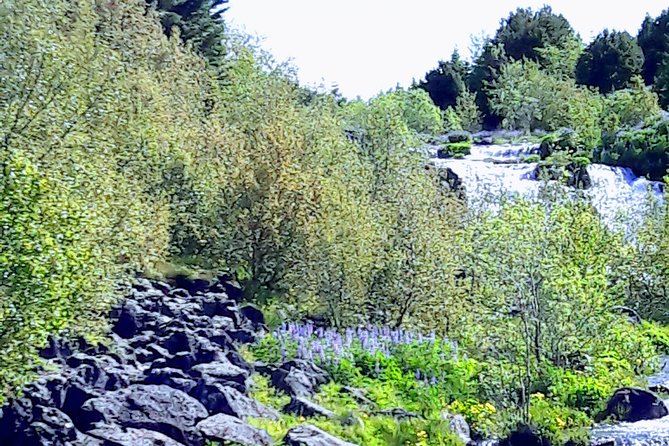
Next up is Grjótagata, tied to an older area called Grjótaþorp (Grjóti Village). This is one of those Reykjavik corners where history shows up in the shape of the streets.
The name connects to Grjóti, one of eight smallholdings on Reykjavík’s 18th-century estate. In the late 18th century, as wooden buildings spread on Aðalstræti, a cluster of turf houses appeared on the Grjóti property. Turf housing is a big part of why places like this feel distinct from later Reykjavik development.
The neighborhood nearly didn’t survive. In the 20th century, it fell into dilapidation because there were plans to build a major road through it. That road idea was eventually abandoned, and the wooden houses were renovated. Some buildings were also brought back from other districts, restoring and consolidating the old street plan.
If you like photo streets and small-scale city texture, this is a great pause. You get narrow streets, detached wooden houses, and small, well-tended gardens. The admission is free, so you can spend extra time here if the light is cooperating.




Reykjavik’s founding story, from fishing village to capital
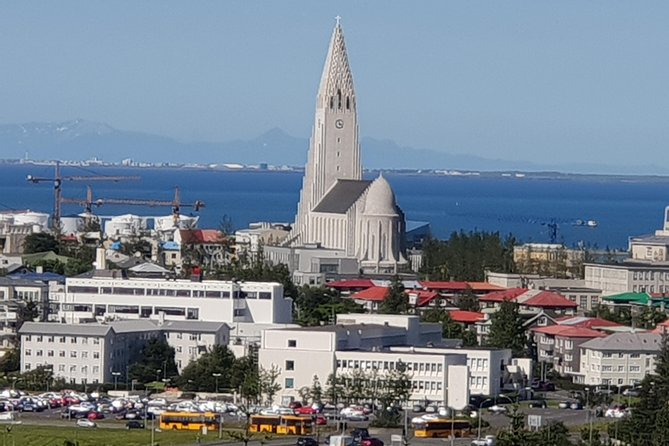
Then you land in the broader Reykjavik city context, built on a timeline that feels almost unbelievable. Reykjavík was founded in 874 by Ingólfur Arnarsson. For a long time, it was a small fishing village and trading post. Later it became the administrative center of Danish-ruled Iceland on August 8, 1786, and from 1843 it became the capital.
What I like about starting this next is that you can now attach names and dates to what you’re seeing. A city tour can be “nice buildings, nice photos.” This one helps you connect the dots, so when you stand near civic buildings or modern landmarks, you understand why people settled, ruled, and rebuilt in this specific place.
It’s scheduled for about 40 minutes here, so it’s a meaningful chunk of time without dragging. You’ll come away with a better mental map of what Reykjavik does well: blending governance, daily life, and architecture in compact distances.
Harpa Concert Hall: the glass building that draws crowds since 2011
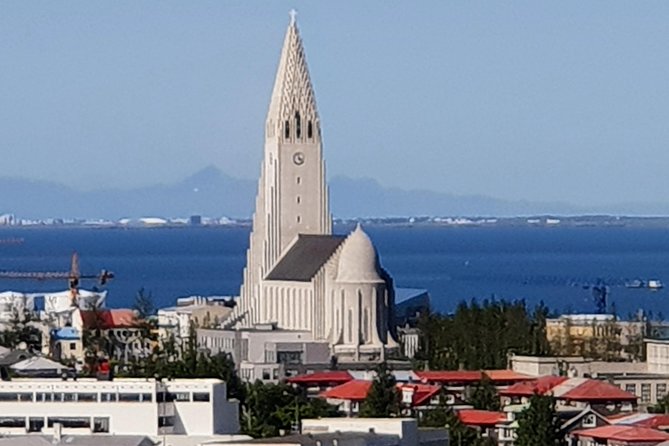
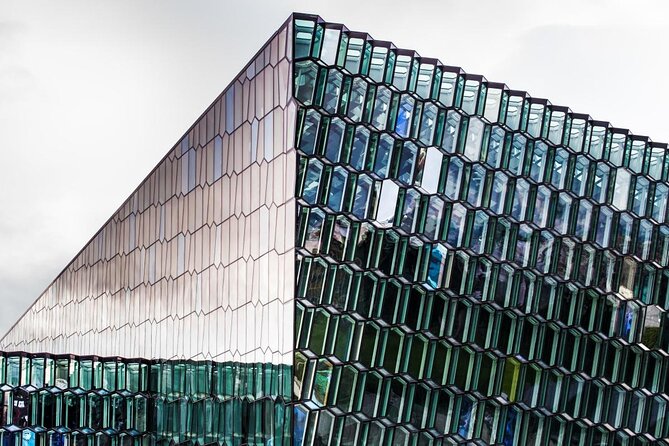
Harpa Concert Hall and Conference Centre is a modern contrast to the earlier stops, and it’s hard not to notice. Located at the heart of Reykjavik, it’s award-winning architecture and opened May 4, 2011. Since opening, it has attracted about 4 million guests.
Even if you’re not catching a show, Harpa is worth the time because it represents how Reykjavik projects culture outward. The building isn’t just functional. It’s designed to look like a piece of Iceland’s geology made human-scale and city-friendly. If you enjoy architecture, you’ll probably lose track of time just looking at the shapes and reflections.
Expect around 20 minutes. That’s enough to get photos from the outside and take in why it has become such a focal point.
Reykjavik City Hall by the pond: water, nature, and birds
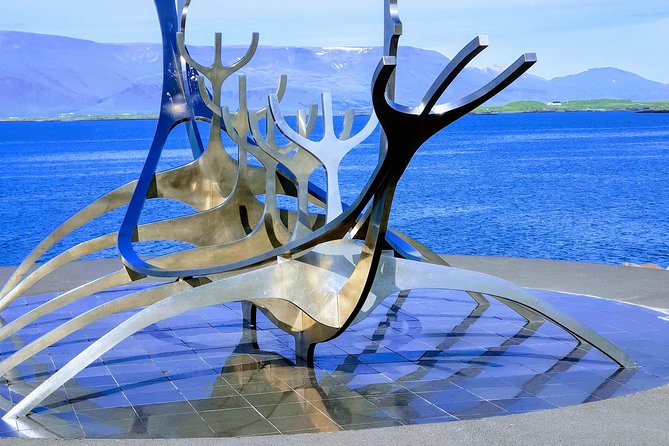
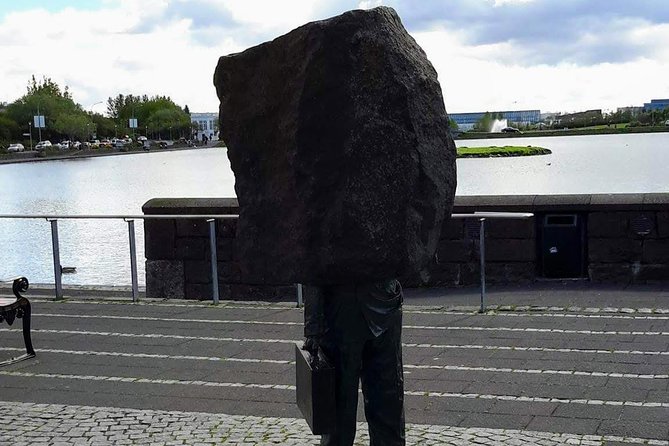
Reykjavik City Hall sits on the northern shore of a pond in the city center. Here’s what makes it interesting: it connects nature and water, and its design is meant to attract birdlife right where people live and work.
That’s a practical urban idea. In many cities, you’d have to drive or hike to find nature. In Reykjavik, you can watch it from the middle of town. If you’re the type who loves small details, keep an eye out for movement near the water and think about how city planning shapes daily mood.
This stop is about 20 minutes. It’s also free, so it’s a low-risk, high-reward photo and people-watch break.
Perlan, the Pearl on Öskjuhlíð Hill (ticket included)
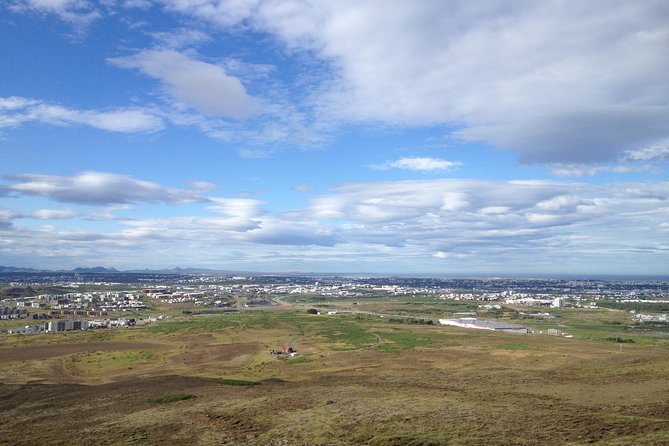
Perlan is one of those Reykjavik icons that makes your brain go, Ah, that’s the place. It’s on Öskjuhlíð Hill, which rises 61 meters above sea level, and Perlan sits at the top like a landmark designed to be seen from multiple angles.
The building is composed of a huge glass dome sitting on six hot water tanks. That design explains a lot about Iceland itself. Here, hot water is not just a comfort feature, it’s part of how people live with the landscape.
Since the Perlan ticket is included, you’re not doing extra math at the last minute. Plan for about 30 minutes at this stop. It’s enough time to take in the structure, enjoy the viewpoint, and reset before heading out toward the harbor area.
Hafnarfjörður: a harbor town with Vikings, hidden people, and character
After central Reykjavik, you head toward Hafnarfjörður, located in the greater capital area. It’s a harbor village and the third most populous city in Iceland.
Here’s a fun cultural angle that’s built into the local identity: Hafnarfjörður is often called the town of the hidden people and Vikings. Even if you don’t go down a fantasy rabbit hole, the nickname signals something real about Icelandic culture. Stories and folklore are part of how people explain place and personality.
Expect about 30 minutes here, and it’s free to enter at this stop. In that time, you can stroll, absorb the harbor vibe, and snap photos that feel different from the center of Reykjavik.
Bessastaðir: the president’s home and Snorri Sturluson’s shadow
Bessastaðir is the official home of the President of Iceland, and it has layers of history you can feel in the name itself. The property was first settled in the year 1000. Later, it became one of Snorri Sturluson farms in the 13th century.
Snorri’s life ended violently, and after he was murdered, Bessastaðir was claimed by the king of Norway. That’s a big storyline packed into a place that feels quiet. The result is a stop that doesn’t need loud spectacle to be memorable.
Like Perlan, the Bessastaðir ticket is included. Plan for about 30 minutes. If you like historical connections tied to real locations, this is a standout.
The guides: what makes this tour feel personal
The biggest compliment I can give this experience is how it handles the human side of city touring. The guides are praised for being friendly, fun, and fluent in English, and that’s the difference between facts you forget and context that sticks.
The way it’s described, guides like Gulla and Villi bring a high-energy approach that still stays respectful. They give you time to explore and take photos, and they make the day feel like you’re being looked after, not processed through a route.
That’s the value of a private tour, and it shows most in the small timing decisions. If it’s windy, you might pause sooner. If a street looks better in the current light, you might spend a minute longer there. Those are the “invisible” advantages.
Price and value: is $650 per group worth it?
The price is $650 per group, up to 4 people, for about 3 to 4 hours. That sounds like a lot until you break down what you actually get.
You’re paying for:
- Private transportation in an air-conditioned vehicle
- Pickup from the greater capital area
- Onboard Wi-Fi
- A private guide experience (not a shared group format)
- Tickets included for Perlan and Bessastaðir
- Free admission at multiple other stops, including Parliament House, Grjótagata, Harpa, and City Hall
If you’re traveling as a couple or a small family, the math can work fast because you’re not paying per person for every transfer and every ticket. Even if you subtract the included admissions, you’re still getting the structure and local expertise you’d otherwise cobble together yourself with separate tickets, transit, and time spent figuring routes.
The best way to judge value is simple: if you want a first-day orientation and you’d rather spend your effort on seeing Iceland than organizing it, this price can feel fair.
What to pack and how to get the most from the 3 to 4 hours
You’re outside for parts of the tour, even when you’re mainly walking around civic buildings and photo points. Iceland weather can swing quickly, so think in layers:
- A warm outer layer you can keep on even when you’re stopping often
- Gloves or something finger-friendly for cameras
- Comfortable shoes for short walks on city sidewalks
Also, since Perlan and Bessastaðir are ticketed, plan to move at a steady pace so you don’t end up sprinting at the end of the day.
Finally, use the Wi-Fi to help with planning. If you’re hungry after the tour, you’ll be able to quickly check what’s open and where to go next.
Should you book this Reykjavik Northernmost capital tour?
Book it if you want a stress-free Reykjavik overview that links history, architecture, and local character in a route that makes sense. The mix of civic landmarks, old wooden neighborhood texture, and big iconic stops like Harpa and Perlan gives you a full picture without turning the day into a marathon.
I’d skip it or rethink if you’re only interested in museums that require longer time inside, because this experience is built for seeing several key spots in a half day. And if you hate rescheduling, remember it requires good weather, and you can be offered a different date or a refund if conditions are too poor.
If you’re open to a guided route with included tickets and real local context, this is one of the most efficient ways to start your Reykjavik trip.
FAQ
How long is the tour?
It runs about 3 to 4 hours.
How many people are in a group?
It’s a private tour for your group, up to 4 people.
Do you offer pickup in Reykjavik?
Yes. Pickup is offered from the greater capital area.
Is Wi-Fi provided during the tour?
Yes, there is Wi-Fi on board.
Is the tour available in English?
Yes, it is offered in English.
What tickets are included?
Tickets are included for Perlan and Bessastaðir. Other listed stops have free admission.
Are meals included?
No, meals are not included.
Do I receive a ticket on my phone?
Yes, a mobile ticket is provided.
What if weather is poor?
This experience requires good weather. If it’s canceled due to poor weather, you’ll be offered a different date or a full refund.
Can I cancel for a full refund?
Yes. You can cancel up to 24 hours in advance for a full refund.