

Reviewed · GUIDED
13-Day Iceland Geology Adventure Guided Tour from Reykjavík
Iceland’s geology feels close enough to touch. This 13-day guided geology adventure follows Dr. Jovanelly and her husband Joe Cook, and it’s built around her field guide approach to how Iceland’s landforms are made, in a small group. You’ll move through famous sites and lesser-known geologic signatures, with the kind of close-up stops that make the island feel readable.
Two things I love are the morning teaching moments that connect the dots between plates, eruptions, and ice, and the hands-on field experiences like hiking on a glacier surface and exploring a lava tube. You do not need a geology degree to enjoy it, because Dr. Jovanelly’s explanations are designed for real people outdoors.
One consideration: this is an active trip. You’ll be out in changeable Iceland weather and spend time on uneven ground, including glacier terrain, so you should plan for an outdoors-first pace and pack for cold and wet.
Key highlights you’ll actually feel in Iceland

- Dr. Jovanelly’s field-guide teaching style: She uses her book Iceland: Tectonics, Volcanics, and Glacial Features to explain what you’re standing on.
- More active exploration than big-box tours: Glacier hike, iceberg lagoon time, lava cave exploring, and crater and basalt walks.
- Plate tectonics made visible: You visit places that show the North America and Eurasia plates separating, plus grabens and fissures.
- Geothermal energy shows up in multiple ways: Blue Lagoon, Hellisheidi power work (including carbon capture), and Geysir heat.
- A small group with breathing room: Maximum 16 travelers, plus a full free day in Akureyri.
More days handed to a local guide
- Reykjavik: Whale Watching Tour with Expert Guide★ 4.2 · 2,307 reviews
- The Golden Circle Guided Bus Tour from Reykjavik★ 4.5 · 1,726 reviews
- From Reykjavik: Best of Golden Circle Guided Tour★ 4.8 · 1,646 reviews
Meeting Dr. Jovanelly and getting the geology framework fast

If you want Iceland to feel more than postcard scenery, this is a smart way to do it. The big difference here is that your guides are not just “tour people.” Dr. Jovanelly, together with Joe Cook, leads with deep research, and she teaches using her own field-guide approach. That matters because Iceland’s drama is not random. It’s the same story told in different chapter locations: plates shifting, volcanoes building, glaciers carving.
You’ll also notice the group size. With a maximum of 16 travelers, explanations can stay specific. You’re not just herded from stop to stop, you’re given time to look, ask questions, and connect what you see to the process that formed it.
And you’ll start early. The tour begins at 7:00 am from the meeting point in central Reykjavik at Gistiheimilið SunnaÞórsgata 26. That early start is part of the deal in Iceland, and it can be a perk if you like crisp mornings and fewer crowds.
Reykjavik orientation, then dinner where the trip starts to click
Day 1 is about getting your bearings in Reykjavik before you settle into the group vibe. There’s time to explore the city, then you meet for a group dinner. That dinner moment may sound basic, but it often helps more than you’d think. You’re about to spend 13 days following geology across an island, and it’s easier when you’ve already met the people you’re doing it with.
Practical tip: Reykjavik in the first day can be windy and cool, even if you’re arriving in good weather. Wear a layer you can add or remove quickly.
Blue Lagoon to Fagradalsfjall, where Iceland’s heat feels immediate
On Day 2, you ease in with the Blue Lagoon. You get an afternoon to relax and adjust from jet lag, and that’s valuable on this kind of trip. Geology days can be full-on, so building in recovery time is not fluff. It’s strategy.
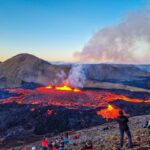
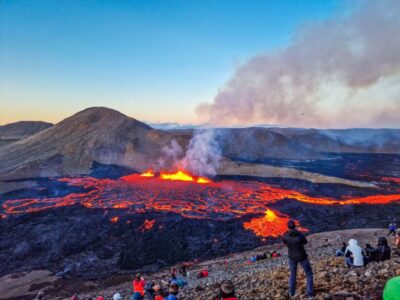
From there, you head toward Fagradalsfjall Volcano, framed as one of Iceland’s most recent volcanic activities. This is the kind of stop where you’ll learn to read new volcanic surfaces like field evidence, not just “a cool lava place.” You’ll see how fresh volcanic behavior differs from older landscapes that have had time to erode, crack, and change.
If you’re wondering whether you need geology background: you don’t. The learning is structured around what you’re standing on, and the teaching is built to make causes understandable without math homework.
Hellisheidi geothermal, carbon capture lessons, and fissures you can feel

Day 3 leans hard into Iceland’s geothermal backbone. At Hellisheidi, you visit a power plant to learn about geothermal energy and carbon capture projects. That’s a rare combination in travel: you see the technology and then connect it to the geology beneath it. Iceland’s heat is not just a tourist product. It’s industrial-scale energy sourced from the same geothermal system that fuels hot springs and boiling areas.
Then comes a set of “tectonics on the ground” moments. The Bridge Between Continents is your visual cue for how the North American and Eurasian plates are separated. Thingvellir gets a deeper version later, but this one helps you understand the concept quickly, before you spend days walking around related features.
Next, you visit Stampar, a scoria crater field. A scoria field is the kind of volcanic feature that sounds technical until you’re actually there and see how eruptions build a landscape through layers and fragments. You’ll also stop to look at one of Iceland’s largest and deepest lakes, described as sitting along a fissure. That lake moment is a good reminder that tectonics is not only about cliffs and obvious cracks. It shapes water and basins too.
Thingvellir, Gullfoss, and Geysir, three icons with a single theme: cause and effect

Day 4 connects Iceland’s most famous stops with the geology logic behind them.
Thingvellir National Park is framed as one of the tour favorites, because it’s a top tectonic location. You learn how plates spread apart and how that influenced Viking settlements. This is where geology becomes more than rocks. It becomes history you can walk through, because the landform shaped where people lived and how they built their communities.
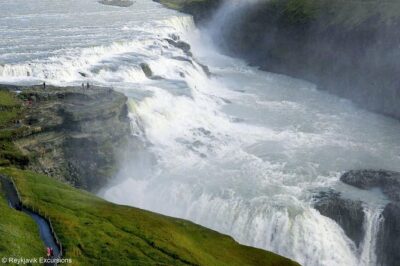
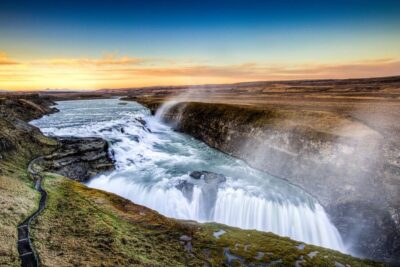
Then you move to Gullfoss Falls, one of Europe’s largest waterfalls. Water erosion can look simple, but paired with the prior plate tectonics lesson, it starts to make sense as part of the same long process. The rock type and structure influence how water cuts.
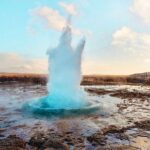
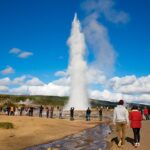
Finally, you reach Geysir. The geothermal idea ties everything together: where there’s geothermal energy, you usually find geysers. You’ll experience the boiling hot spots and understand why Iceland’s underground heat shows up at the surface as dramatic water and steam behavior.
Hekla and Lava Centre, so you can “name the movie” as you watch it

Day 5 is built around volcanology learning with real examples.
The Lava Centre is described as an interactive museum, and even if you only spend a short time there, it can do a lot. Interactive setups help your brain lock onto concepts like eruption styles, volcanic hazards, and what evidence looks like after the fact.
Then you go to Volcano Hekla. It’s presented as active in recent time, and the stop is described as learning while sitting in its shadows. That phrasing matters, because Hekla is not just a single viewpoint. It’s a personality in the landscape, and you’ll likely come away thinking differently about volcanic “presence” after seeing it from multiple angles.
Skaftafell: glacier-top hiking plus wine and cheese

Day 6 is one of the most active parts of the trip. At Skaftafell National Park, you hike on top of a glacier in a guided tour that runs about 3 hours, and that time count matters. This is not a quick photo stop. It’s a proper walking experience where the geology is visible in the way ice sits, flows, and exposes surfaces.
After your tour, guides provide a wine and cheese reception. I like that kind of reset after physical effort because it turns the hike into a memory rather than a workout you only survived.
A practical note: glacier walks can be cold and windy even in fair weather. Pack layers, and bring gloves or mittens if you run cold.
Iceberg lagoons and black sand: reading Iceland’s ice story

Day 7 is about ice in motion, and you get it from multiple angles.
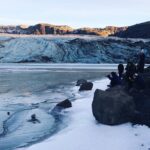
First is Fjallsarlon Iceberg Lagoon, where you view glacier ice from the water. Seeing ice afloat changes how you understand glaciers, because you realize how much ice calving changes the shape and movement of the glacier system.
Then you go to Diamond Beach, described as the place where icebergs land before being carried out to sea. The contrast between white ice and dark sand is not just pretty. It’s visual evidence that glacial material gets transported, sorted, and deposited by water movement.
Finally, you visit Jokulsarlon, another lagoon with stunning icebergs plus seal viewing, and it’s noted as a great spot for birders. Food vendors are mentioned, including the chance to grab a hot dog. That’s Iceland travel practicality in the best way: you can keep going without turning the day into a logistics puzzle.
Dettifoss, Hverfjall, and the power of erosion and impact
Day 8 takes you to Dettifoss. It’s described as massive, with exposed columnar basalt. Columnar basalt is one of those geologic clues that makes Iceland feel like a textbook. It’s also a reminder that volcanoes don’t only create heat. They create rock structures that later get fractured, exposed, and carved by rivers and waterfalls.
Day 9 shifts into crater territory.
You visit Hverfjall, described as a massive explosion crater. Then you head to Skutustaoagigar to learn about pseudo craters and how they impacted the Vikings. Pseudo craters can sound like a trick word until you see how water and volcanic activity can create crater-like features. The Viking connection is especially useful because it anchors how people interacted with dangerous or unusual terrain long before modern science put names on the processes.
The day also includes Dimmuborgir lava formations, with a guided tour among features that have debated origins. That “debated origin” detail is not a buzzkill. It’s honest science learning. It teaches you that interpretation can evolve, and it trains you to look at evidence instead of hunting for a single memorized answer.
Akureyri free day: recovery, wildlife time, and optional whale watching
Day 10 is a free day in Akureyri, a charming town where you can rest and choose your own pace. The idea here is smart: after several intense geology days, you get a buffer.
You might use the day for shopping, relaxing, whale watching, or birding. Even if you keep it low-key, Akureyri can feel like a breather between the more rugged regions.
My practical advice: plan one “active” thing and one “easy” thing. If you overbook, you’ll pay for it on the last stretch.
Water Museum in Stykkisholmur: glacier memory as art
Day 11 goes to Stykkisholmur for an art installation at the Water Museum that pays respect to glaciers past and present. It’s a break from the hard rock and ice-on-stone theme, but it fits the overall trip. Iceland’s geology is not just a snapshot. It’s changing, and art can help you feel that change without needing a field notebook.
Even if you’re not an art person, it’s a useful emotional reset before the final west and lava-cave focused days.
Snæfellsnes and Vatnshellir: stratovolcano views and a real lava tube
Day 12 is where the trip swings into Iceland’s west with clear-sky potential.
First is Snæfellsnes, where clear skies can bring views of this stratovolcano. A stratovolcano is a different volcanic structure than the crater fields and scoria landscapes earlier, and it helps you expand your mental catalog of Iceland’s eruption styles and landforms.
Then comes Vatnshellir Lava Cave, where you explore a lava tube and learn about how it formed. Lava tubes are a reminder that “lava on the surface” is only part of the story. The way lava travels underground can create long, hollow structures. You’ll likely find the cave stop particularly memorable because it’s geology you experience with your senses, not just your eyes.
You also visit Snaefellsjokull National Park and the glacier. The glacier adds the ice layer back in, so you end the day with both volcanic structure and ice influence in the same mental frame.
Final Reykjavik time: bring your questions home
Day 13 returns to Reykjavik for final exploration before departure. The last day is more flexible, which helps you reflect. By then, the tectonics and volcanoes you saw earlier tend to start “grouping” in your mind. You may catch yourself thinking in processes, not just landmarks.
If you want to get more value from the final hours, bring one question you couldn’t ask during earlier stops. Small group size makes it easier to get an answer.
Price and value: what you’re really paying for at $9,200
At $9,200 per person, this is a premium trip. The question is whether it’s premium in ways you feel.
Here’s what you’re paying for, based on what’s actually built into the experience:
- Field-guide leadership from Dr. Jovanelly, including her book-driven teaching approach.
- Active experiences that cost more than standard sightseeing, like the glacier-top hike and the lava cave visit.
- Excursion fees included, so you are not stacking many separate add-ons to reach the full “Iceland geology highlights” experience.
- A small group size, maximum 16 travelers, which supports better explanations and less time waiting around.
What you might not love is that this price assumes you want the learning and the physical, outdoors time. If you only want a scenic drive and a few photos, this may feel too focused and too active for your style. But if you want Iceland to make geological sense, the cost starts looking less like a luxury surcharge and more like paying for specialized guidance, access, and teaching time.
Who should book this geology adventure, and who should skip it
This trip is a great fit if you:
- Want Iceland explained through tectonics, volcanics, and glacial features, not just attraction names.
- Like active travel, including hiking and time outdoors.
- Enjoy asking questions and learning in small groups.
- Want the comfort of included excursion costs and a structured path across the island.
You might skip it if you:
- Hate early starts and want mostly casual, slow sightseeing.
- Are uncomfortable with cold weather and outdoor walking, including glacier terrain.
- Prefer travel where the main goal is pure relaxation, with minimal instruction.
Should you book this 13-day Iceland geology tour?
I think it’s an easy yes if your goal is to understand Iceland as a living geology system. Dr. Jovanelly and Joe Cook bring a teaching focus that makes repeated themes click: plates moving, volcanoes building, glaciers reshaping, and geothermal energy turning geology into power. The route also balances “big icons” with more specific features that most people miss.
If you’re on the fence, your best clue is how you feel about active days. If you’re happy to walk, read landforms, and learn while you go, this tour matches that mindset. If you want a purely restful, photo-only trip, you might find it too much.
FAQ
Who leads the tour?
The tour is led by Dr. Jovanelly and her husband Joe Cook (also referred to as Joey in some tour materials and feedback).
How long is the tour?
It runs for about 13 days.
When does the tour start, and where is the meeting point?
The start time is 7:00 am. The meeting point is Gistiheimilið SunnaÞórsgata 26, 101 Reykjavík, Iceland.
Is a geology background required?
No. The tour says a background in geology is not necessary to participate.
Is the group small?
Yes. The tour has a maximum of 16 travelers.
What is included in the price?
The tour notes that many excursion fees are included in the price.
What happens if the tour is canceled due to weather?
The experience requires good weather. If it is canceled due to poor weather, you are offered a different date or a full refund.
More Days with a Guide

More Tours in Reykjavik
More Tour Reviews in Reykjavik
Fresh off the road around Reykjavik


Guided, compared.
 ★ 4.7Jokulsarlon Glacier Lagoon Full-Day Guided TripFrom $2033,302 reviews
 ★ 4.2Whale Watching Tour with Expert GuideFrom $902,307 reviews
 ★ 4.5The Golden Circle Guided Bus Tour from ReykjavikFrom $881,726 reviews
 ★ 4.8Best of Golden Circle Guided TourFrom $791,646 reviews
 ★ 4.9Guided Foodie Walking Tour with 6 TastingsFrom $1421,645 reviews
 ★ 4.0Northern Lights Guided Bus Tour from ReykjavikFrom $731,183 reviews
 ★ 4.4Guided Afternoon Hiking Tour to New Volcano SiteFrom $126934 reviews
 ★ 4.8Snaefellsnes & Mt. Kirkjufell Guided Minibus TourFrom $159757 reviews