

Reviewed · HORSES
From Reykjavík: Viking Horseback Tour in Hafnarfjörður
Three hours, and the city disappears. The Viking Horseback Tour from Reykjavík takes you out to the Reykjanes area on Icelandic horses, where you can feel the famous tölt and other gaits without spending your whole trip in transit. I like that this is built for stronger riders, so you spend real time moving at the paces that make Icelandic horsemanship special.
The second thing I really like is the people and setup at Íshestar Stables, including time in the barn and careful horse matching. One consideration: this is not a casual, beginner walk. It is for strong intermediate riders only (min age 12, max weight 110 kg), and you need to be comfortable controlling your horse at all gaits.
Key things to know before you ride

- You ride more than you watch, with about 2.5 to 3 hours of riding time, including stops
- Small group size (limited to 12), which helps your guide keep things organized and safe
- Gear is handled for you, including warm overalls/rain gear, rubber boots, riding boots help, helmets, and rain options
- You need real control skills, since the route includes trot and canter stretches
- You cannot bring big bags or cameras, but there are safety boxes at the center for valuables
- Not everyone fits the rules, including a min age of 12 and no participation for intoxication or pregnancy
Worth a look alongside this Reykjavik pick:
- Reykjavik: Red Lava Horse Riding Tour★ 4.8 · 2,383 reviews
- From Reykjavík: Icelandic Horse Riding Tour in Lava Fields★ 4.7 · 1,356 reviews
- Icelandic Horseback Riding Tour with Pickup Option from Reykjavik★ 5.0 · 1,145 reviews
Why Hafnarfjörður makes this feel easy from Reykjavík

If you’re basing yourself in Reykjavík, most outdoor tours start with a long drive. This one is different. Íshestar Stables is just outside Hafnarfjörður, about a 10-minute drive from Reykjavík, so you trade jet-lag and logistics for saddle time fast.
Hafnarfjörður is also close enough that you do not feel stranded out in the middle of nowhere. You can keep your day light before you go, then head back afterward and still have time for dinner, a warm drink, or a quick stop at one of the central drop-off points on the return.
The payoff is psychological as much as scenic. When you’re riding on Icelandic horses right near the city, you feel the country’s raw edges sooner. Lava fields and open terrain show up with almost no warm-up drive.
Icelandic horse gaits: what you actually come for
Most “horseback” tours elsewhere focus on walking, maybe some trot. This tour is designed for riders who want more than that. You are here to experience the Icelandic horse as a working athlete, not a novelty.
The key is the set of gaits you ride through, especially tölt. In the feedback I’ve seen, riders repeatedly single out smooth tölt and the chance to get into canter stretches, not just a gentle cruise. That matters because tölt is the signature move of the Icelandic horse: it is distinctive, steady, and famously comfortable once you’re in the rhythm.
You should also expect that other gaits come into play. The tour is described for strong intermediate riders who are comfortable with walk, trot, and canter. If you are not at that level yet, your confidence will be the limiting factor, not the views.
Entering Íshestar Stables: the barn time and gear you will need

The center at Íshestar Riding Tours is set in the countryside just outside Hafnarfjörður, and the facilities are part of why this tour works so well in practice. Before you ride, there is typically time for you to meet the horses in the barn area, including pets and close-up attention. It’s a small moment, but it helps a lot, because you start the ride already trusting the horse you’re about to be on.
Gear is included, which is a real value win in Iceland. You should expect warm overalls or rainwear options, rubber boots and an appropriate riding setup, plus a helmet. That means you do not need to hunt down last-minute gear in Reykjavík.
There are a couple practical notes I’d treat as must-knows:
- You cannot take backpacks, bags, or large cameras on the ride. The center provides safety boxes for valuables, so bring only what you truly need on horseback.
- If you are bringing your own riding gear, Iceland has strict rules about used leather items. Riding gear needs to be washed at 40°C, dry cleaned, or disinfected, and used leather gear may not be brought into the country.
One more small tip: bring sunglasses, gloves, and a hat. It sounds obvious, but wind and low sun can make your hands and eyes feel worse faster than you expect.
The ride in the Reykjanes preservation area: lava, open terrain, and big sky
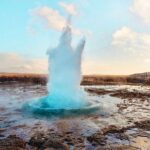
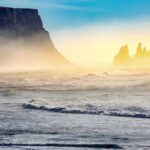
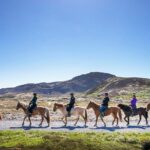
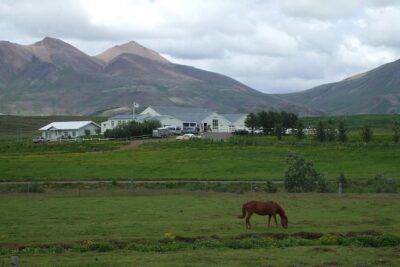
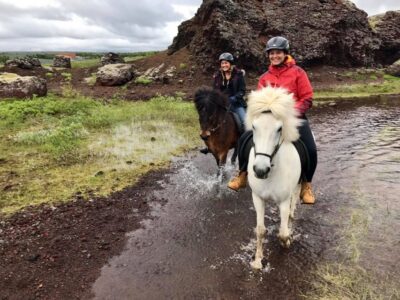
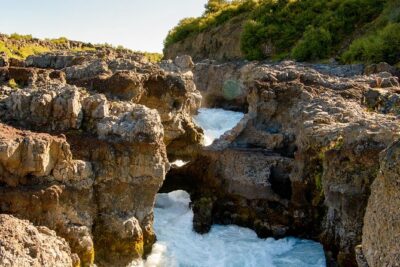
The tour heads into the Reykjanes preservation area, and the highlights are exactly what you’d hope to feel on horseback: lava fields, mountains in the backdrop, and the sense of open Icelandic terrain. This is not staged scenery. It is working nature, with uneven ground and real weather.
A key detail for planning your expectations: the ride is described as 3 hours total, with around 2.5 to 3 hours of actual riding time including stops. That stop time matters, because your guide is keeping the group together and handling transitions between gaits and terrain.
What I’d expect from a rider’s point of view:
- You start with a steady warm-up and then work into tölt and other gaits
- There are stretches where the horse moves more freely, including trot and canter sections for riders who meet the requirement
- The scenery changes as you move between lava ground, rougher patches, and any sheltered bits like small forested sections (when conditions allow)
Weather can shift fast on the Reykjanes Peninsula. Even with wind, the operation is set up for rider control and safety, and horses are selected for how each rider needs to feel that day. That’s part of the “Viking tour” appeal here, it is not just a pretty walk, it is hands-on riding.


Control at canter and why strong intermediate riders get the fun
This is the tour that makes sense once you are past the basics. The requirements are explicit: strong intermediate riders only, with comfort controlling the horse at all paces. You are also given guidance on your comfort level, and the staff works to match you with a horse that suits your needs.
Here is what that means on the ground:
- If you can already handle walk, trot, and reasonable canter, you get to focus on riding, not recovery
- If you are still building confidence at canter, you might end up spending mental energy staying balanced instead of enjoying the Icelandic gaits
- The terrain includes uneven ground, so your seat and control matter
One reason experienced riders love this tour is that they get multiple gait experiences in one outing. Instead of “one trot pass and done,” you ride long enough that tölt feels natural and canter stretches feel worth it.
And yes, some riders have reported fairly windy conditions. The good news is the tour’s horse selection and group management are built for those realities. If you are unsure how you handle wind on horseback, do not guess. Choose the lesson-based or beginner-friendly option from the same stables family instead.
Timing, pickup, and how the afternoon flows

This is an afternoon-style ride. The Viking Tour Express schedule is described as Mondays and Fridays at 13:00 in winter, and every day of the week in summertime. Your booking shows duration around 3 hours, and because pickup is optional, door-to-door time can vary a bit depending on your hotel or bus stop.
You can be picked up from designated Reykjavik hotel stops or specific bus stops only. On return, you also drop off at a long list of Reykjavik locations. A few examples from the provided stops include:
- Harpa area (bus stop #5)
- Höfðatorg (bus stop #12)
- Ráðhúsið, City Hall (bus stop #1)
- BSI bus terminal
- Hilton Reykjavik Nordica
- Safnahúsið, the Culture House (bus stop #6)
If you are prone to running late, build in buffer. You meet at Sörlaskeið 26 in Hafnarfjörður, and you should arrive 30 minutes early.
Safety rules that actually affect what you feel on the ride

Safety here is not just paperwork. It changes who gets to ride and how the group is managed.
The tour will not allow anyone under the influence of alcohol or intoxicating drugs. Pregnant women are also not permitted, due to possible damage risk in an accident. Those rules are firm, and honestly, they protect both the riders and the horses.
There is also a weight limit of 110 kilograms (250 pounds). You should treat that as a practical fit requirement, not a suggestion.
Group management is another quiet safety tool. If groups are divided during the ride, parents must stay in the same group as their children. This keeps supervision consistent and reduces awkward handoffs while riding.
Finally, your own role matters: you join the tour of your own free will and should inform the guide of any conditions that might affect your ability to participate. If your ankle, knee, or balance is having a bad day, tell them early so you can be assigned the right horse.
Price and value: what $246 buys you
$246 per person for a roughly 3-hour experience is not cheap, but in Iceland it often means you are paying for real expertise, time, and horse care.
Here is the value breakdown as I see it:
- You get included riding gear, including helmet and appropriate cold or rain layers. That can easily save you the cost and hassle of buying or renting gear just for one day.
- You get a small group (limited to 12), which tends to lower waiting around and improves your ride quality.
- You are paying for skilled matching between rider and horse. This is what turns the ride from stressful to smooth.
- You are getting access to a specific riding environment, the Reykjanes preservation area, right from the Reykjavík orbit.
If your goal is to simply see horses for an hour, you might find cheaper options. But if your goal is to ride Icelandic horses properly, including tölt and canter stretches, this price starts to look fair.
Also, if you are staying in Reykjavík, the optional transfer options help. Less time planning buses means more time on the saddle.
Who should book this Viking horseback ride, and who should not
Book this tour if:
- You are a strong intermediate rider who can handle walk, trot, and canter with control
- You want a real Icelandic experience focused on horse movement and gaits, not only views
- You like small-group formats and want the guide to manage your pacing and horse choice
Skip it and choose another option if:
- You are under 12
- You are above 110 kg
- You have limited experience and cannot comfortably control the horse at all gaits
- You are pregnant, or you expect to ride despite alcohol or drug influence
One more practical thought: Icelandic horses are comfortable when you are matched well, but that matching only works if you accurately rate your skills.
Final call: should you book this tour?
I’d book this Viking Horseback Tour in Hafnarfjörður if you are chasing the real Icelandic riding experience: tölt time, canter stretches, and big Reykjanes terrain, all with gear provided and a guide who can keep a small group running smoothly.
I would not book it if you want a beginner-friendly intro. This is for riders who can keep control and enjoy the pace. If that’s you, it is one of the best “close to Reykjavík” ways to get both nature and serious riding in the same afternoon.
FAQ
How long is the Viking Horseback Tour in Hafnarfjörður?
The tour duration is listed as 3 hours, and the actual riding time is around 2.5 to 3 hours including stops.
Where does the tour meet?
The meeting point is Sörlaskeið 26, 220 Hafnarfjörður. You should arrive 30 minutes before departure.
What is the minimum age to join?
The minimum age is 12 years.
Is pickup from Reykjavík available?
Pickup is optional from hotels or designated bus stops only in Reykjavík. If you stay in a private apartment, the closest pickup point is communicated by email.
What gear is included?
You are provided with a helmet, and warm overalls and/or rainwear, plus riding boots in the appropriate size (rubber boots and rainwear or a warm outfit are listed as included).
Can I bring a backpack or large camera?
No. Backpacks, bags, or large cameras cannot be taken with you on the ride. There are safety boxes at the riding center for valuables.
Do I need to bring my own gloves and hat?
You should bring sunglasses, a hat, and gloves, plus weather-appropriate clothing.
Who is this tour suitable for?
It is for strong intermediate riders only. Riders need to be comfortable and in control at all paces. The tour is also noted as requiring substantial prior riding experience.
Is there a weight limit?
Yes. The weight limit is 110 kilograms (250 pounds).
Are there any safety restrictions like alcohol or pregnancy?
Yes. Anyone under the influence of alcohol or intoxicating drugs will not be permitted, and pregnant women are not allowed on the tour.
What is the cancellation policy?
You can cancel up to 24 hours in advance for a full refund.
More Horses in Reykjavik
More Tours in Reykjavik
More Tour Reviews in Reykjavik
Fresh off the road around Reykjavik


Horses, compared.
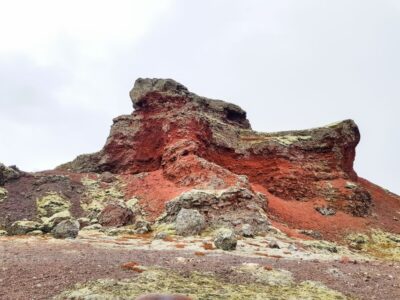 ★ 4.8Red Lava Horse Riding TourFrom $1422,383 reviews
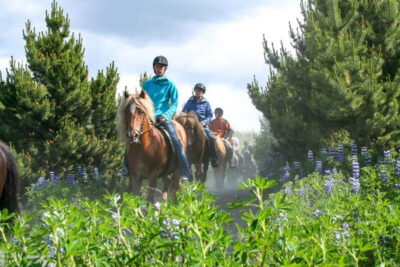 ★ 4.7Icelandic Horse Riding Tour in Lava FieldsFrom $1411,356 reviews
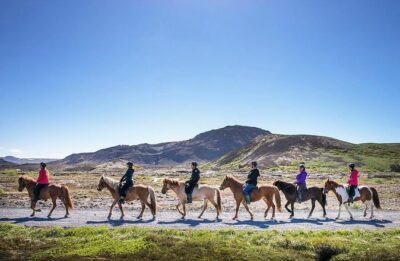 ★ 5.0Icelandic Horseback Riding Tour with Pickup Option from ReykjavikFrom $1331,145 reviews
 ★ 5.0Icelandic Horseback Riding Tour Including Pick Up from ReykjavikFrom $152784 reviews
 ★ 5.0Red Lava Horse Riding Tour From ReykjavikFrom $139386 reviews
 ★ 5.0Golden Circle, Fridheimar Farm & Horses Small Group Tour from ReykjavikFrom $130309 reviews
 ★ 4.7Small-Group Horse Volcano Riding Tour with PickupFrom $191196 reviews
 ★ 5.0Silver Circle: Lava Cave, Waterfalls & Iceland Horses-Small GroupFrom $219181 reviews