
Reviewed · REYKJAVIK CITY SIGHTSEEING
Reykjavik City Card 24-hour
Reykjavik in 24 hours can be oddly doable. The Reykjavik City Card is built for time-tight days, letting you mix and match top sights without a rigid route, while paying once for a stack of admissions. I love that it covers major museums and more in a tight radius, and it keeps things flexible so you can chase what looks interesting.
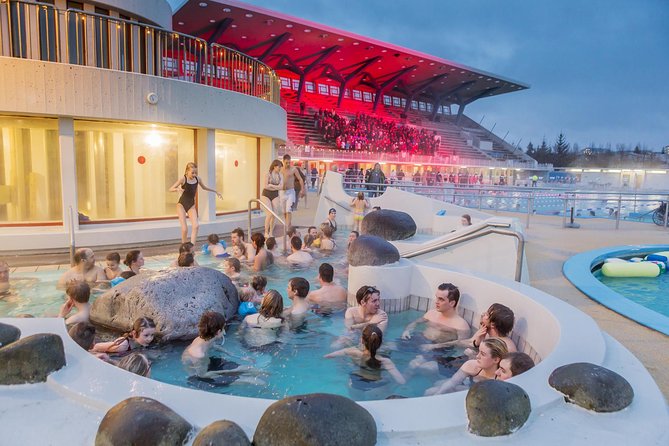
My second big win is the geothermal pool access. Reykjavik is famous for hot tubs, steam baths, and saunas, and having that included turns downtime into part of the plan, not an afterthought.
One caution: don’t treat the included bus as a perfect taxi replacement. The Straeto rides help, but several reviews point out that routing and stops can make cross-town hops slower than expected, especially for getting to ferry pick-up points.
Key things to know before you go

- 24-hour flexibility, no strict itinerary, so you can reorder stops around your mood.
- Admission stacking across art, history, photography, and open-air museum options.
- Straeto bus included, but plan for walking when routes are awkward.
- Many museums run late enough for a 10:00 AM start, then close by mid-afternoon or 5:00 PM.
- Geothermal pools are a value magnet, especially on cold or rainy days.
- Videy ferry access can be tricky by bus, depending on where the bus actually drops you off.
More of the capital in a single morning
- Reykjavik: City Sightseeing Hop-On Hop-Off Bus Tour★ 3.9 · 1,283 reviews
- Reykjavik Walking Tour – Walk with a Viking★ 4.5 · 1,018 reviews
- City Sightseeing Reykjavik Hop-On Hop-Off Bus Tour: 24 or 48-Hour★ 3.0 · 839 reviews
What this card is really for in Reykjavik

The Reykjavik City Card 24-hour is designed for one simple goal, help you see a lot while keeping cost predictable. You get a single pass that can cover museum entry, zoo time, select bus fares, and public thermal pools. That means you do not have to stop and decide, pay for this one, skip the next one.
This also fits Reykjavik’s reality. Even without the card, you would likely spend your day bouncing between museums, neighborhoods, and public pools. The card just removes the constant ticket math. And because there is no strict itinerary, you can start with art, pivot to history, then finish in a hot pool when the weather turns.
Value depends on how you use it. If you visit just one or two places, it can feel expensive. If you stack several museum entries plus at least one thermal pool session, it usually makes sense fast.
Price and timing: why $47.88 can be worth it
At $47.88 per person for a 24-hour card, the best way to judge value is to count how many paid admissions you will replace. Your included list is broad enough that you can easily schedule a full day that uses multiple categories:
- Art museums (several)
- A national history museum and a settlement-era exhibition
- Maritime history
- Photography
- Open-air farm buildings
- Zoo and family park
- Multiple geothermal pools
If you aim for, say, two museums plus one pool, it can still be decent. But you will get the clearest value if you plan like this: one history or settlement stop early, one art stop mid-day, and one pool late, when you want something warm and low effort.
Also pay attention to operating hours. The card is valid during a long daily window on weekdays, Monday to Friday from 9:00 AM to 10:00 PM. But many museums do run on typical schedules and often close around 5:00 PM, so you cannot treat every stop as open-ended.
One more practical timing detail: the card is often bought in advance, with an average booking window of about 22 days. If your dates are fixed, you do not want to gamble at the last minute.
Voucher swap and using the Straeto bus without losing your day
Here is the one logistics step you should not skip. You need to swap your digital voucher for the physical City Card at participating museums in Reykjavik. Until you have the card in hand, you cannot just show your phone and walk in.
Once you have it, the transportation piece matters. The card includes bus fares on Reykjavik’s public bus system, specifically the Straeto bus in the city. That is helpful if you are tired, it is raining, or you want to cover bigger distances in less time.
But do not assume the bus will always be the shortest path. Reviews included with this experience highlight that bus stations that are actually open can cluster around downtown, and the schedule you expect may not match your timing. In plain terms, if you are going far across town, walking can still beat waiting.
My advice: treat the bus as a supplement, not your backbone plan. If you can cluster stops into one side of the city, you will feel smarter immediately.
National Gallery and Hafnarhús: modern Icelandic art in historic walls

Start with the National Gallery of Iceland (Listasafn Íslands). It focuses strongly on 19th and 20th century Icelandic art, with international names also appearing in the collection. Even if you are not an art super-fan, this is a good anchor stop because it helps you understand what Iceland artists were reacting to over time.
What you will enjoy: the mix of Icelandic works with internationally known artists gives you context fast.
Time tip: plan around about 1 hour here, then move on. If you wander too long, you risk getting squeezed by museum closing times.
Next, head to Reykjavik Art Museum Hafnarhus (Hafnarhús). This is housed in an old harbor warehouse in one of Reykjavik’s oldest areas, where early docks and boats once lined up. The exhibition program is contemporary and progressive, with multiple galleries showing established and emerging artists.
Hafnarhús also ties in with pop art through the presence of works by Erró, a major figure in that international scene. If you like art that feels graphic and playful, this stop can reset your day after a more traditional national gallery visit.
Potential drawback: the vibe is exhibition-dependent. If a gallery is quiet or if an exhibit does not match your taste, you might feel like time slipped. That is not a flaw with the card, just a reason to keep your day flexible.
Worth a look alongside this Reykjavik pick:



National Museum of Iceland and Reykjavik 871±2: history you can feel

If you want a quick way to get grounded in Iceland’s story, the National Museum of Iceland is the best opening move. It is focused on Icelandic cultural history, with displays meant to help you connect past, present, and future. In about an hour, you can walk away with a better sense of what shapes Icelandic identity.
Then swing to The Settlement Exhibition, Reykjavik 871±2. This one is unique because it deals with what archaeologists found under the city. The exhibition centers on evidence from the early settlement age, including a hall excavated in 2001. The hall was inhabited from roughly 930 to 1000, and the surrounding remnants include turf pieces that hint at earlier wall building.
Why I think this is a top use of your card: it turns Reykjavik into something physical and layered. You look around at modern streets and realize you are standing on a place that has been changing for centuries.
Time planning: both the National Museum and the Settlement Exhibition are easy to combine because they sit in the same overall history track. If your day is tight, pairing them is one of the smartest ways to spend included admissions before museums start narrowing their hours.
Reykjavik Maritime Museum and Árbær open-air farm life

Reykjavik Maritime Museum is your fisheries and port story stop. The exhibition Fish & folk looks at how fishing evolved from rowing boats to large vessels from the late 19th century onward, with the perspective of Reykjavík as Iceland’s biggest fishing port. The museum building matters too, because it once housed a fish factory.
This stop is often easier to love than you expect. Even if you do not plan to be a deep-tech history person, the maritime angle can help you understand why Reykjavik’s geography and economy developed the way it did.
After that, go for a total change of pace with Árbær Open Air Museum. This is an outdoor museum with more than 20 buildings that form a farm, village, and town square feel. Many buildings were relocated from central Reykjavik, so you are not just looking at one house. You are moving through something closer to a small community layout, and it helps you picture daily life well into the 20th century.
Big advantage: it is the kind of stop that keeps you moving, which matters on a short card day when you have limited time.
Weather note: because it is outdoors, you will want to pair it with good layers and a realistic plan for wind and rain. If conditions are truly rough, you can shift your priorities toward indoor museum stops.
Reykjavik Museum of Photography, Kjarvalsstaðir, and Asmundarsafn

If you want a day that mixes art styles, photography fits well. Reykjavik Museum of Photography focuses on Icelandic photography alongside works by foreign photographers, and it tends to place images in artistic, social, and cultural context. Plan about an hour so you can actually read the information, not just skim walls.
Then hit Kjarvalsstaðir, Reykjavik Art Museum, dedicated to Jóhannes S. Kjarval, one of Iceland’s influential artists. The building is a great pairing with the art, with large floor-to-ceiling windows looking toward Klambratún Park. That means you get light, views, and artwork in one place, even if the exhibit changes.
For sculpture fans, Asmundarsafn is a standout. The sculptor Ásmundur Sveinsson designed the building, and it is a white dome surrounded by his sculptures in the garden. Inside, the structure itself feels like part of the experience, with a design inspired by vernacular Mediterranean architecture.
Practical heads-up from real-world timing: in reviews, I saw people warn that some exhibitions might not be running and that some museums can open later than you expect. So when you are planning, do not treat 24 hours as 24 hours of guaranteed access. Check what is open when you arrive.
Kópavogur side trips: Gerðarsafn and the Natural History Museum

One of the useful things about this card is that it can extend beyond central Reykjavik into Kópavogur. Gerðarsafn is a progressive art museum with temporary exhibitions and a collection, centered on modern and contemporary art. It also notes itself as the only Icelandic museum built in honor of a female artist, which adds meaning beyond just the art program.
Then there is the Natural History Museum of Kópavogur. It breaks into geological and zoological sides. The geology section covers Iceland’s formation and main rock and mineral types. The zoological section focuses on Icelandic birds, mammals, fish, and invertebrates.
Value of this pairing: you get contrast. One museum is about human creativity and modern art. The other gives you an Iceland science angle without requiring a long excursion out of town.
Culture House and smaller museum stops for people who like variety
The Culture House includes a permanent exhibition called Points of View, which lets you see collections from six major Icelandic cultural institutions, organized thematically with artworks plus museum objects, books, and maps. If you like browsing by idea instead of by single artist, this can be a low-pressure win.
Aðalstræti 10 is a smaller museum and exhibition space that is part of the Reykjavik City Museum network. It offers a shorter visit window, which is useful if you are trying to fit multiple indoor stops without exhausting yourself.
And if you want sculpture history that is more personal, the Sigurjón Ólafsson Museum is a good fit. It focuses on works by the Icelandic sculptor Sigurjón Ólafsson, with the museum founded in 1984 by his widow, converting his Laugarnes studio into an exhibition space.
Hafnarfjörður options: art and regional museum time
The card also includes stops in Hafnarfjörður, just outside Reykjavik’s core. Hafnarborg, the Centre of Culture and Fine Art, offers an art museum experience in that area. It is listed for a shorter visit, so you can use it as a mid-day break between bigger museum blocks.
Hafnarfjörður Museum gives you regional history across multiple buildings in the center of the town. This is a nice way to make your card day feel more like you left downtown rather than only hopping between big-name galleries.
Geothermal pools: your warm, included reset button
If you ask me what makes this card truly feel like a Reykjavik card, it is the thermal pools. The card includes admission to multiple public sundlaugar, Reykjavik’s geothermal-heated pools.
These pools offer the full Iceland formula: steam baths, saunas, hot tubs, and jacuzzis. Another practical detail is that these facilities emphasize guest safety, with staff training mentioned as part of operations.
You can also use pools as your time management tool. If your day is getting tight, swapping one extra museum stop for a 1.5 to 2 hour soak can keep you from burning out.
Several pools are listed, including Grafarvogslaug, Arbaejarlaug, Laugardalslaug, Breiðholtslaug, and Dalslaug. There is also Klébergslaug in the Kjalarnes sportcenter area, and Sundhollin Public Baths plus Vesturbaejarlaug.
How to choose quickly: pick a pool near where you already are. Do not waste energy crossing town for a specific facility unless you are staying close by.
Video Island ferry and the zoo: nature time with one big timing risk
Videy Island is a nature-and-art stop. The island has unspoiled nature and abundant birdlife. It also features modern art installations connected to Icelandic history.
However, this is where you need to be strategic. One real-world warning tied to this card is that the included bus may not take you all the way to the Skarfabakki Pier, which is the ferry pick-up location in December. In that scenario, people ended up needing a taxi, and it cost around $50 USD. The bigger issue was that taxi drivers had trouble finding the terminal location, which turned the day messy.
So if you are traveling in winter or you are visiting on a day with unusual ferry schedules, treat Videy as a plan with Plan B. The card can include ferry access, but your transportation link to the pier might not be as smooth as you would hope.
Then there is Reykjavik Family Park and Zoo. This is not only a petting zoo. It includes Icelandic farm animals, mammals from Iceland’s wildlife, plus a small exhibition of reptiles, amphibians, and insects. It is designed to be fun at any time of year, with playground equipment in summer and on weekends in winter, weather permitting.
Winter consideration: some reviews called out that the zoo can feel like it is not fully running when it is cold or when weather shuts things down. If you are visiting in the harsh season, you should expect more variability and keep extra indoor museum time in your pocket.
How to build a 24-hour route that actually works
Here is a smart way to use the card without getting stuck in transit delays.
1) Start with a compact cluster
Pick either downtown and harbor museums or the Kópavogur side trips, then build your day around nearby stops.
2) Plan around the museum close time
Many museums tend to be open from around 10:00 AM to about 5:00 PM. If you want art and history plus a zoo, you must start early and keep your schedule honest.
3) Use pools as your late-day anchor
Pools are flexible, warm, and forgiving. If your schedule slips, a pool visit can still rescue the day.
4) Treat Videy as a dedicated half-day objective
Do not tack it on casually if you are unsure about ferry pier access. Aim to get to the terminal with a buffer.
5) Walk when the bus is confusing
Reviews specifically mention that relying on the bus alone can be frustrating. You can win time by walking between clustered stops, then using the bus only where it truly saves effort.
If you do just those five things, you will feel like you are in control, not like you are constantly chasing doors before they close.
Who this card suits best, and who should skip it
This is ideal for:
- You want to see lots of Reykjavik sights without doing the ticket cost math
- You like art, photography, and history, and you are willing to hop between museums
- You want geothermal pool time without paying separately
- You are traveling with limited daylight hours or unpredictable weather
It may not suit you if:
- You plan to keep the day ultra-light with just one or two stops
- You are counting on the bus to be a perfect door-to-door service for far-out locations like ferry terminals in winter
- You have strict timing for one or two specific outdoor attractions that depend on schedules
The card shines when you use it like a sampler menu, stack admissions, then recharge in a hot pool.
Should you book the Reykjavik City Card 24-hour?
Yes, book it if your plan includes multiple museum stops and at least one thermal pool visit. At $47.88, the value is strongest when you fully exploit the admission range instead of treating it as a casual add-on.
If you are the type who prefers one big attraction per day, skip it and buy individual tickets. And if your heart is set on Videy Island in winter, plan for transport to the ferry terminal, because the included bus connection might not be enough by itself.
When it works, it feels like you are getting Reykjavik’s greatest hits with less friction, more warmth, and a lot less worrying about ticket lines.
More City Tours in Reykjavik


More Tour Reviews in Reykjavik





More of Reykjavik City


Fresh off the road around Reykjavik


Reykjavik City Sightseeing, compared.
 ★ 3.9City Sightseeing Hop-On Hop-Off Bus TourFrom $471,283 reviews
 ★ 4.5Reykjavik Walking Tour – Walk with a VikingFrom $551,018 reviews
 ★ 4.3Reykjavík City CardFrom $40964 reviews
 ★ 3.0City Sightseeing Reykjavik Hop-On Hop-Off Bus Tour: 24 or 48-HourFrom $48839 reviews
 ★ 4.3Hop-On Hop-Off Bus and Perlan Museum Entry TicketFrom $88719 reviews
 ★ 4.0Airport Transfer in Iceland from Keflavik Airport to Reykjavik City With Hotel Drop OffFrom $40464 reviews
 ★ 5.0Walking tour of Reykjavik cityFrom $51416 reviews
 ★ 4.8City Walking tour in Small Group with Local GuideFrom $51380 reviews
Browse the lists this tour appears in