
Reviewed · REYKJAVIK CITY SIGHTSEEING
Reykjavik Walking Tour – Walk with a Viking
Two-hour walking tours in Reykjavik are worth it. This one blends Viking history with real city navigation, hitting iconic stops like Harpa and Hallgrímskirkja.
I like that the group stays small (12 max), so you get answers, not just announcements. You also get practical local advice on where to shop and eat as the walking keeps your energy up.
I love the mix of big landmarks and “you’d miss this alone” moments, like the Ingólfstorgur square with the 3-meter pillars and the Oldest House on Aðalstræti. I also like the guide style, which is often funny and fast enough to keep the pace comfortable, even when the weather changes.
One consideration: the tour runs in all weather conditions, so you need proper layers and waterproof footwear. If you hate cold wind and sideways rain, you will feel it more on a walking schedule than you would on a bus tour.
Key things I’d mark as your must-knows
- 12 people max, so questions actually get answered while you walk.
- Viking stories plus day-to-day Iceland, including myths and modern life, not just old sagas.
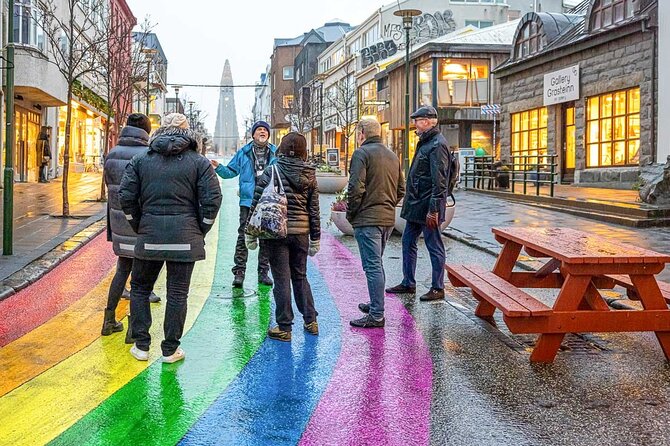
- A smart downtown route that strings together squares, government buildings, harbor views, and shopping.
- Harpa Concert Hall with its famous light displays, a great photo stop that feels distinctly Reykjavik.
- Flexible guide moments, and some guides add extra flair, like songs during the Harpa stop.
- Weather matters, because it stays outdoors for most of the 2 hours.
More of the capital in a single morning
- Reykjavik: City Sightseeing Hop-On Hop-Off Bus Tour★ 3.9 · 1,283 reviews
- Reykjavik Walking Tour – Walk with a Viking★ 4.5 · 1,018 reviews
- City Sightseeing Reykjavik Hop-On Hop-Off Bus Tour: 24 or 48-Hour★ 3.0 · 839 reviews
What $55.63 buys you in central Reykjavik
At $55.63 per person for about 2 hours, you’re paying for a guide plus a tight route through downtown, with a small group cap. For Reykjavik, that’s good value because the city is compact but not always intuitive. If you’re only here for a couple of days, a guided walk helps you spend less time guessing and more time seeing.
The tour also has a “pay once, see a lot” structure. Most stops are free to access on foot, and the route is built around outdoor viewing plus a few specific indoor moments. The one notable exception is the Settlement Exhibition, which costs extra since it is not included.
The small group setup is where the money turns into something you can feel. You’re not packed shoulder-to-shoulder. That makes it easier to stop often, take photos, and ask questions about what you’re seeing, especially around the more formal buildings like Alþingi and City Hall.
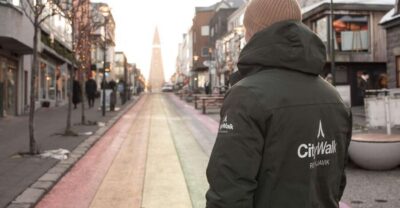
One extra plus: your guide typically wears a light blue jacket with Your Friend in Reykjavik on the back. That makes it easier to find your group quickly at the first meeting point, even if you’re jet-lagged or dealing with Icelandic weather.
Meeting at Ingólfur Square: the 3-meter pillars and your Viking guide
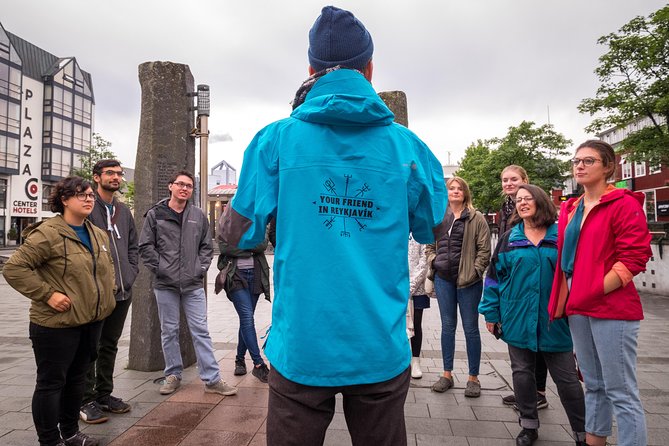
Your tour starts at Ingólfur Square (Ingólfstorgi) by the two stone pillars in the center of Reykjavik. The pillars are over 3 meters high, and that size helps you orient fast, which is exactly what you want on day one.
Look for your guide at the square, and keep an eye out for that light blue jacket with Your Friend in Reykjavik on the back. It’s a practical touch that matters in Reykjavik, where wind and weather can make “meeting points” feel harder than they should.
Timing matters too. Plan to be there about 5 minutes early. One useful tip from past guests: Reykjavik’s squares can be confusing on maps. Make sure you’re at the correct Ingólfur Square by the two pillars, not a nearby similarly named location.
What you’ll get right away is story and context. The Viking theme isn’t only costumes. It’s used as a way to explain why Reykjavik looks the way it does, how settlement shaped the city, and why certain landmarks feel symbolic. If you get a guide with strong storytelling, this first stop often sets the tone for the whole walk.
Guides can vary, but you might be led by people like Dúi, Ester E, Bo, Einar, Magnús, Robyn, Óli, Stefán, or Ana, based on recent guide names. The consistent thread is that the walk stays interactive, not lecture-only.
Aðalstræti and the Oldest House: street history you can actually see
Next you’ll walk to Aðalstræti, where the standout is the Oldest House in Reykjavik. You’re surrounded by modern buildings, which makes this stop hit harder. It feels like a time marker on a street that otherwise moves forward quickly.
This is the kind of stop that works well for first-timers because it’s small and specific. You don’t need to understand Icelandic architecture to appreciate what’s in front of you. The exterior tells a story, and the stop’s value is that you get a real sense of continuity, not just a list of facts.
A good guide will connect the house to everyday life in early Reykjavik and explain what changed over time. In past experiences with this company, guides were praised for mixing city history with current perspectives, so don’t be surprised if you hear how earlier settlement patterns connect to modern neighborhoods and social life.
Practical tip: keep your phone handy. This is an easy stop for photos because the contrast between old and new is so visible. If the weather is bad, you can still get good pictures without standing around for long.
Then you keep moving, which is the whole point of a walk like this. You’re not spending most of your energy lining up at attractions. You’re building a mental map of downtown while learning how the pieces connect.
The Settlement Exhibition under the city, plus Lake Tjörnin’s pause
One of the most interesting stops is the Settlement Exhibition, where you get a peek beneath Reykjavik streets at remains linked to early Viking life. The big hook here is that you’re seeing preserved remnants of a Viking longhouse. That changes the scale in your mind, because the story of Reykjavik is not only written in old buildings above ground.
Important for your planning: this stop is not included in the tour price, so expect to pay an additional admission for it. If you’re trying to keep costs tight, you can still enjoy the rest of the walk. But if you want the Viking element to feel physical and real, this is the stop that delivers.
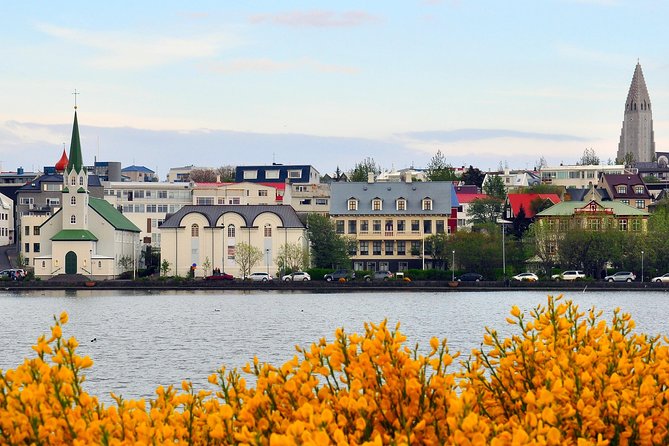
After that, you’ll take a break at Lake Tjörnin. It’s an urban lake, right in the city center, with ducks and seagulls that make it feel less like a parking-lot pond and more like a living pocket of calm. This is a great reset in the middle of a walking tour. Even if it’s gray outside, the water gives your eyes a rest.
If you’re traveling in colder months, Lake Tjörnin is still worth the stop because the lakefront pathways give you a clear sightline and easy seating opportunities. You can sit for a moment, then get going again without feeling like you’re rushing.
This is also where you’ll often hear guide advice that goes beyond history, like what to try for food or how to structure your days around weather and daylight.
Reykjavik on foot, a few more ways



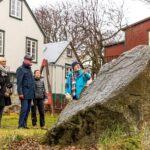
Squares and government stops: Austurvöllur, City Hall, and Alþingi
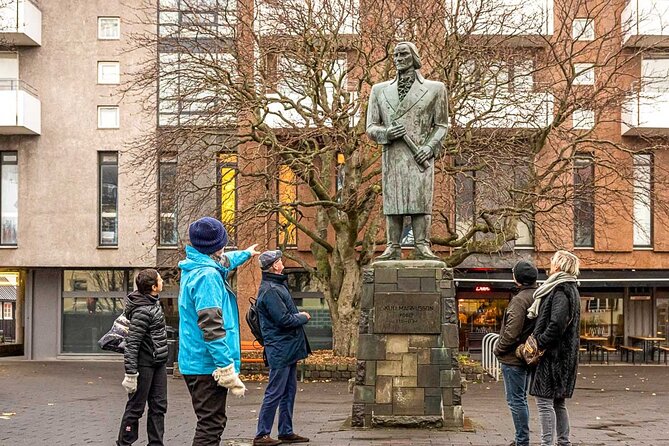
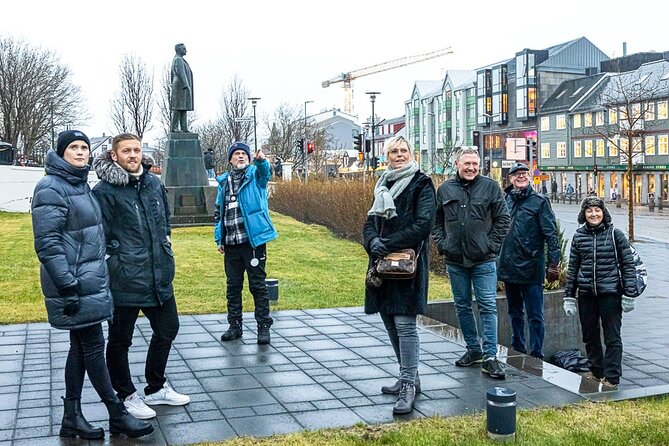
The tour keeps leaning into “how Reykjavik works,” not just “what it looks like.” You’ll pass through Austurvöllur, a central square where locals and visitors gather near cafes and historic buildings. It’s a good place to feel the rhythm of the city. You can watch people move, grab a quick photo, and get a sense of what’s close by.
Then the route includes Reykjavik City Hall, a symbol of civic governance. The stop is designed to give you a window into local democracy and the building’s historical significance. Depending on openings, you might be able to view interior spaces, and you’ll learn how the civic story connects to the way Reykjavik grew.
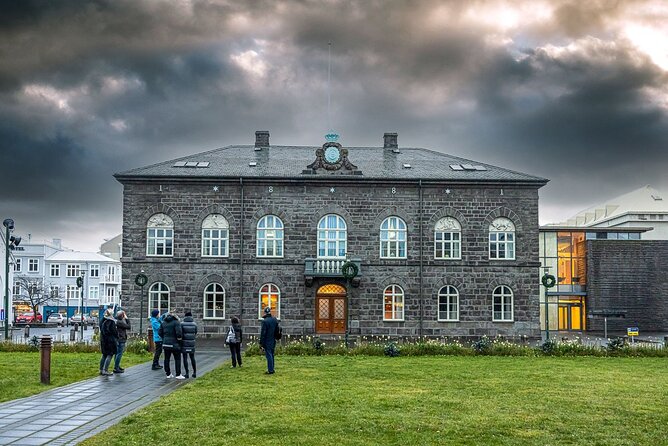
After City Hall, the walk moves to Alþingi (Parliament House). This building matters because Alþingi traces roots back to 930 AD, which is mind-blowing when you stand there and realize how long formal decision-making has been part of Iceland’s identity.
A good guide makes this stop feel human instead of heavy. You’ll hear about debates and how the institution shaped the nation. In past experiences with guides from this company, the best ones balance political context with humor and storytelling, so you leave with the sense that Iceland’s civic culture is not a dry topic.
One nice thing for you: these government stops are all in downtown, which means you keep the “walking momentum” without cramming in another separate bus day.
Old graveyard stories and the Old Harbour seafood mood
Next comes Kirkjugarðurinn Suðurgötu, described as Iceland’s oldest graveyard. It’s not a scary stop, but it is reflective. Walking through an old graveyard gives you a different lens on the city. Reykjavik isn’t just modern design and conference halls. It has roots that reach into the lives of real people long gone.
This stop works best when you slow down for a few minutes and listen for meaning, not just names. A strong guide will connect what you see to survival, community, and how Iceland’s geography shaped life.
Then you move to Old Harbour, where the vibe shifts to maritime. You’ll see cobbled streets, colorful buildings, and boats that give the harbor a working feel. It’s also a practical stop because it tells you where the food and shops cluster if you want an easy evening plan.
If you want seafood without overthinking, this is the part of downtown where you’ll find plenty of waterfront options nearby. Even if you don’t eat immediately, the harbor stop helps you choose where to go later since you’ll recognize the area from the walk.
If the weather is rough, Old Harbour can still be worthwhile because you’re not walking through a maze. It’s an open area where the views keep giving you something to look at while you warm up mentally for the next indoor-looking highlight.
Harpa’s crystalline facade and Laugavegur shopping tips
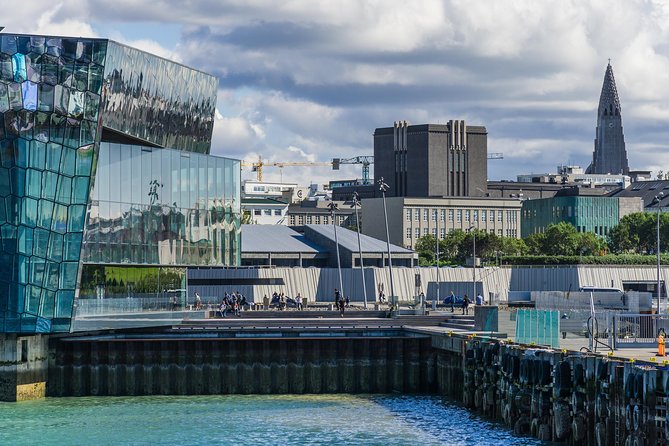
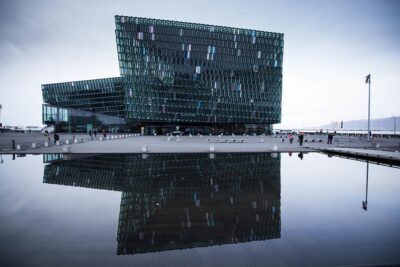
The tour’s architectural moment is Harpa Concert Hall and Conference Centre. Externally, Harpa is a Reykjavik signature, known for a facade that resembles crystalline structures. You’ll also hear about what happens inside, since it hosts events and attracts people even when they are not attending a concert.
The standout feature is the ever-changing light display. The light effects shift and create patterns, and that makes Harpa a high-value photo stop. When the sky is gray, Harpa often becomes the brightest part of the walk, because the facade and interior lighting do the heavy lifting for you.
Some guides add extra moments here too. For example, a past guest noted their guide sang during the Harpa stop. That’s not guaranteed, but it’s a good signal that guides often treat Harpa as a storytelling stage, not just a building photo.
After Harpa, the tour heads to Laugavegur, Reykjavik’s main pedestrian street. This is the practical payoff. Laugavegur is where you’ll find shops and cafes, and your guide’s tips help you pick what fits your budget and tastes instead of wandering randomly.
If you’re wondering what to do after the tour, this is a great clue. The tour ends near Hallgrímskirkja, but Laugavegur gives you a clear path for a later wander, especially if you want souvenirs, quick snacks, or coffee without hopping between far neighborhoods.
Hallgrímskirkja and Arnhöll: where the walk ends with views

Your tour finishes at Hallgrímskirkja (Hallgrímstorg 1), or sometimes at the statue garden of sculptor Einar Jónsson just next door. Either way, you end up in a spot that’s easy to remember and easy to build the rest of your day around.
Before Hallgrímskirkja, you also get time at Arnhöll, a hill viewpoint over downtown Reykjavik. It’s a friendly place to pause and look around. From here you can see colorful rooftops, the church landmark, and in clear weather, the distant mountains that frame the city.
The goal here is not a long hike. It’s a quick visual reset. After two hours of walking and stops, it helps to step back and see how everything fits together.
Hallgrímskirkja itself is the big final landmark. Guides usually bring fun stories and quirky details, and the tone tends to shift to “finish strong” moments like photo time and last-minute tips.
So for you, the value of the ending is simple. You leave with a view that anchors your mental map. You’ll know where downtown is, where the harbor sits, and where to wander next without needing constant phone navigation.
Who should book this Viking-themed walking tour
This tour is a strong fit if you want to do day-one orientation without sacrificing culture or story. It’s also a good match if you like group learning at an easy pace, since the terrain is mostly gentle. Past guests have noted mostly flat walking with at most one small hill, and guides often plan frequent stops so you are not stuck standing in one spot too long.
It’s especially good for:
- First-time visitors who want landmarks like Harpa and Alþingi in a single, organized walk
- Travelers who like myths and Viking connections, but also want modern life explained
- People who value small group interaction, where you can ask questions about where to eat and what to see next
Language is English, and the tour works in all weather. If you’re the type who packs for Iceland properly and you enjoy walking, you’ll be comfortable.
If you’re worried about guide quality, read the overall rating (4.7 with strong recommendations) and pay attention to what you care about most: humor, pace, and respectful communication. There is at least one low rating tied to reported rude conduct. That’s not the norm, but it’s a reminder to trust your instincts and raise concerns early if something feels off.
Should you book Walk with a Viking?
If you’re deciding between doing Reykjavik on your own or with a guide, I think this walk is the better starting move for most people. For $55.63 and about 2 hours, you get a small-group route that covers the places you’ll keep seeing again later, Harpa and Hallgrímskirkja included, plus practical downtown guidance.
Book it if you:
- Want a tight first-day plan that builds a map in your head
- Like stories that connect Viking-era roots to today
- Prefer small groups and easy pacing over rushing between attractions
Consider skipping or swapping if:
- You truly hate walking in cold wind and rain, since it runs in all weather
- You want only museum-level depth, because one major add-on, the Settlement Exhibition, costs extra
My practical advice: wear waterproof shoes, bring layers, and show up on time at Ingólfur Square. If you do that, this tour gives you the quick, confident start Reykjavik visitors usually wish they had.
More Tours in Reykjavik






More Tour Reviews in Reykjavik


More of Reykjavik City






Fresh off the road around Reykjavik


Reykjavik City Sightseeing, compared.
 ★ 3.9City Sightseeing Hop-On Hop-Off Bus TourFrom $471,283 reviews
 ★ 4.3Reykjavík City CardFrom $40964 reviews
 ★ 3.0City Sightseeing Reykjavik Hop-On Hop-Off Bus Tour: 24 or 48-HourFrom $48839 reviews
 ★ 4.3Hop-On Hop-Off Bus and Perlan Museum Entry TicketFrom $88719 reviews
 ★ 4.0Airport Transfer in Iceland from Keflavik Airport to Reykjavik City With Hotel Drop OffFrom $40464 reviews
 ★ 5.0Walking tour of Reykjavik cityFrom $51416 reviews
 ★ 4.8City Walking tour in Small Group with Local GuideFrom $51380 reviews
 ★ 4.0Airport Transfer in Iceland from Reykjavik City to Keflavik Airport with Hotel Pick UpFrom $41332 reviews
Browse the lists this tour appears in